
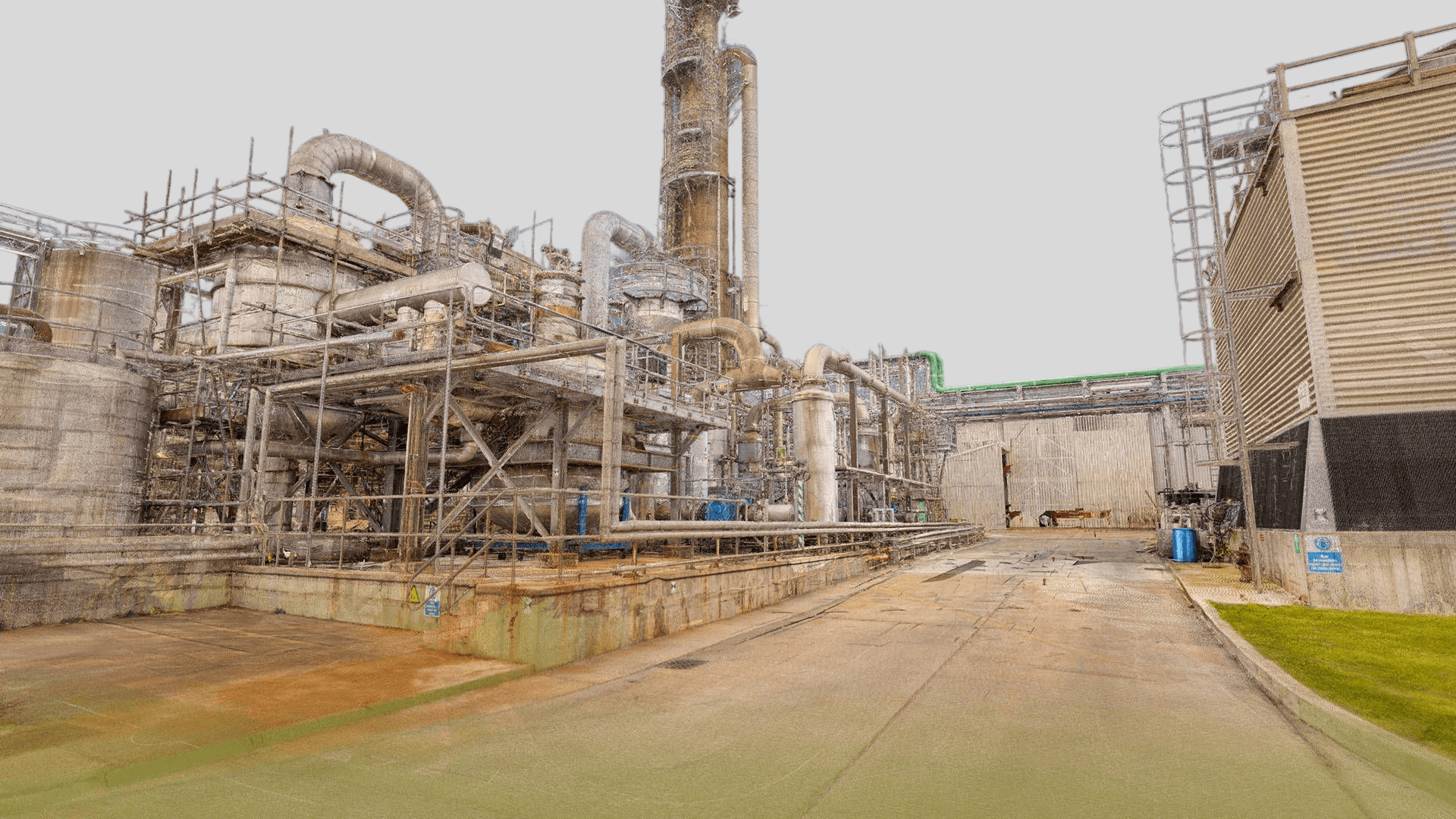
POINT CLOUDS
we deliver clean, registered point clouds in color or black
& white—ready for modeling, measurement, and analysis.
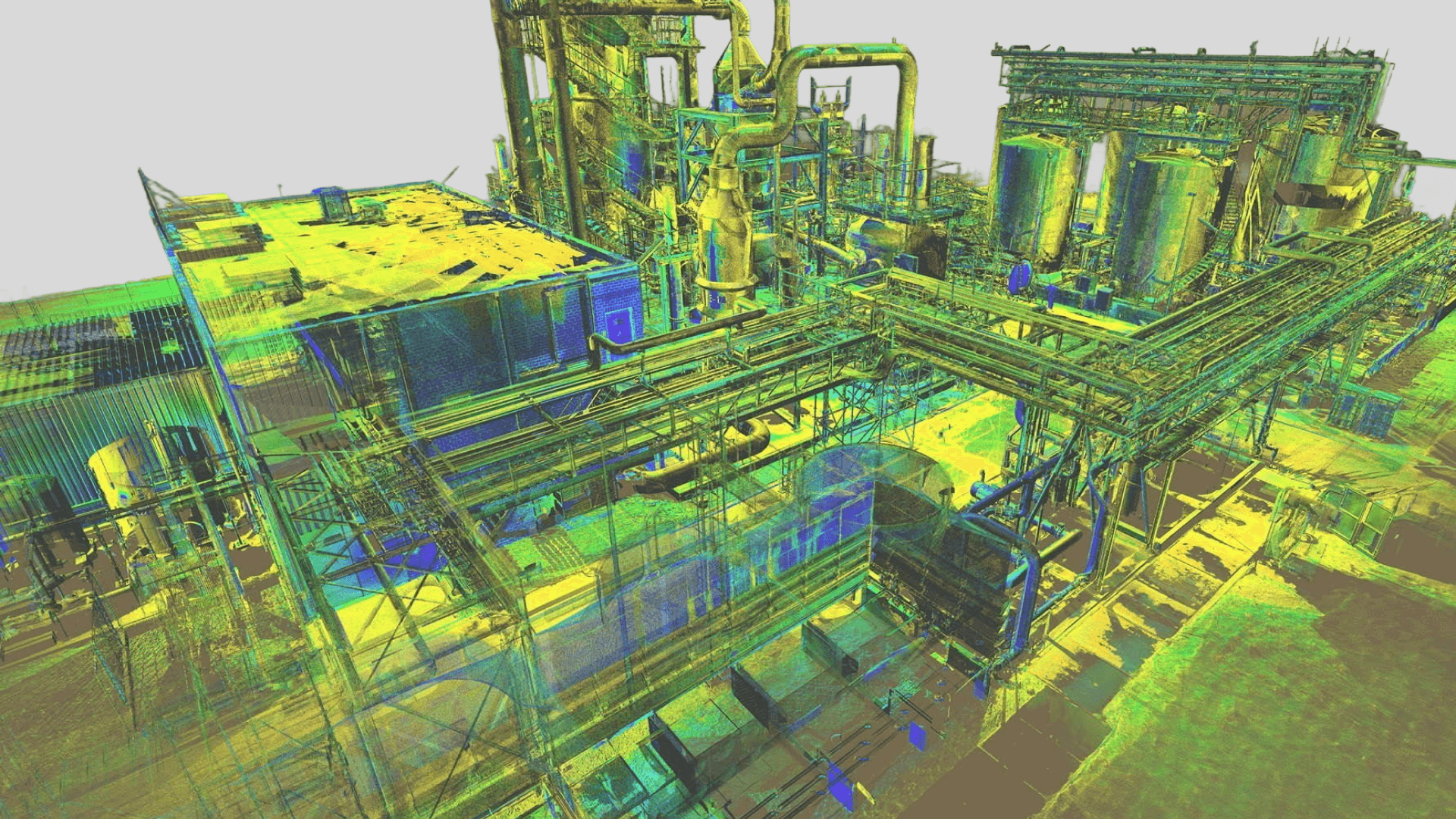
POINT CLOUDS
we deliver clean, registered point clouds in color or black
& white—ready for modeling, measurement, and analysis.

POINT CLOUDS
we deliver clean, registered point clouds in color or black
& white—ready for modeling, measurement, and analysis.


Registered Point Clouds
Registered Point Clouds for Modeling, Measurement, & Analysis
Registered point clouds are one of the most fundamental and valuable outputs of 3D laser scanning. As an efficient and highly accurate method of collecting spatial data, 3D laser scanning captures existing conditions and geometry at a level of accuracy, speed, and detail that traditional survey techniques cannot match. A 3D laser scanner can collect up to millions of individual points per second, with each point containing its own X, Y, and Z coordinate. Combined with high-resolution HDR images captured by the 3D laser scanner, these points can be used to create colored point clouds. Together, these millions to billions of points form a point cloud—the least processed and most information-rich data format produced by 3D laser scanning.
Because registered point clouds preserve highly detailed as-built spatial data, they serve as the foundation for a wide range of downstream deliverables and applications. From registered point clouds, it is possible to create as-built 3D mesh models, 3D CAD models, BIM models, plant design models, and 2D CAD documentation. Registered point cloud data can also be used directly for inspection, storage tank inspection & calibration, volume surveys, construction verification, deformation & wear analysis, topographic mapping & georeferencing, propeller inspection, and VR/AR & 3D digital content. For clients who prefer to process or develop their own deliverables in-house, we can provide cleaned, colored, or black-and-white registered point clouds in a wide range of point cloud file formats, particularly for digital twin and engineering applications.
In larger terrestrial 3D laser scanning projects, registration quality becomes especially important. To achieve an even higher level of accuracy and reliability, we often establish survey control using total stations or laser tracker CMMs together with checkered and sphere targets. This is particularly valuable for large-scale or accuracy-critical work, where the higher angular and range accuracy of total stations and laser tracker CMMs can improve registration quality beyond what terrestrial 3D laser scanners alone can achieve. By incorporating survey control into the registration process, we can reduce measurement drift across large 3D laser scan datasets, strengthen overall quality control, georeference registered point cloud data to global coordinate systems or to a plant’s local coordinate system, and provide clients with a highly accurate digital representation of existing conditions that can be used immediately or developed further into application-specific deliverables.
Our Equipment
Equipment We Use for Registered Point Clouds
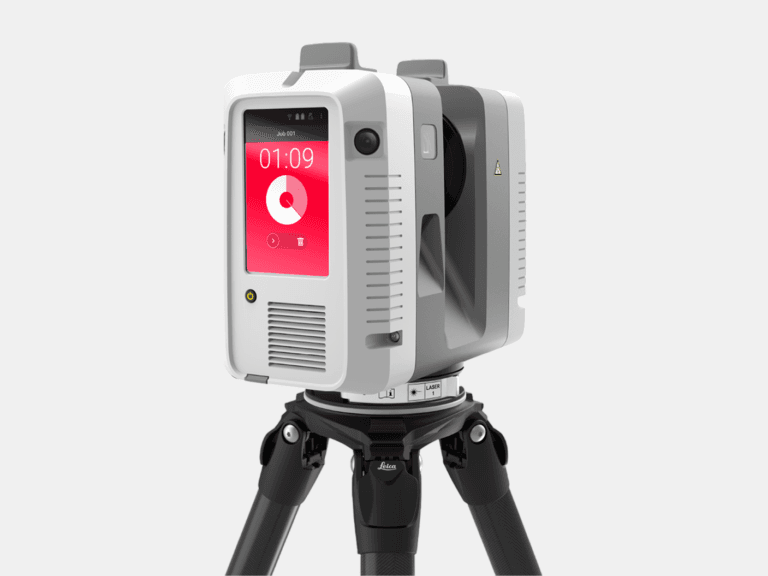
TERRESTRIAL 3D LASER SCANNER
With a range of 0.5-130 m and a 3D accuracy of 1.9 mm @ 10 m, the Leica RTC360 captures high-accuracy terrestrial 3D laser scans of medium to large assets.
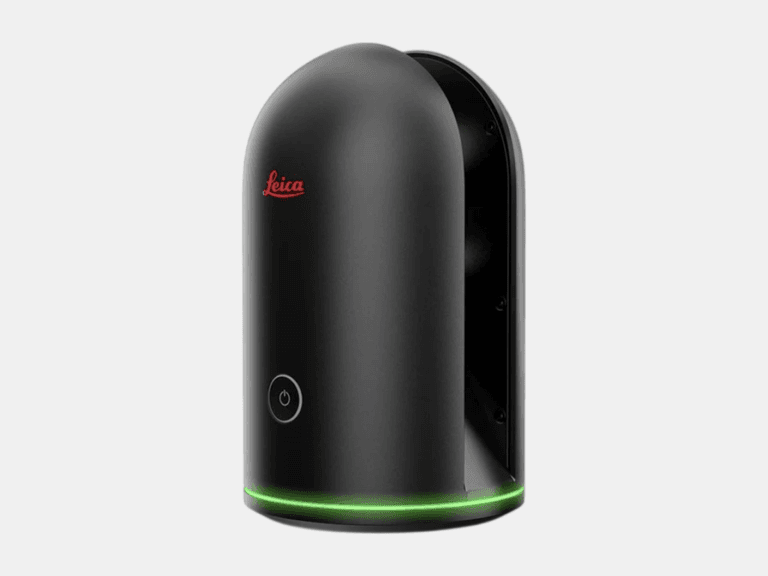
TERRESTRIAL 3D LASER SCANNER
With a range of 0.6-60 m and a 3D accuracy of 4 mm @ 10 m, the Leica BLK360 is ideal for 3D laser scanning in tight, space-constrained areas on small to medium assets.
HANDHELD 3D LASER SCANNER
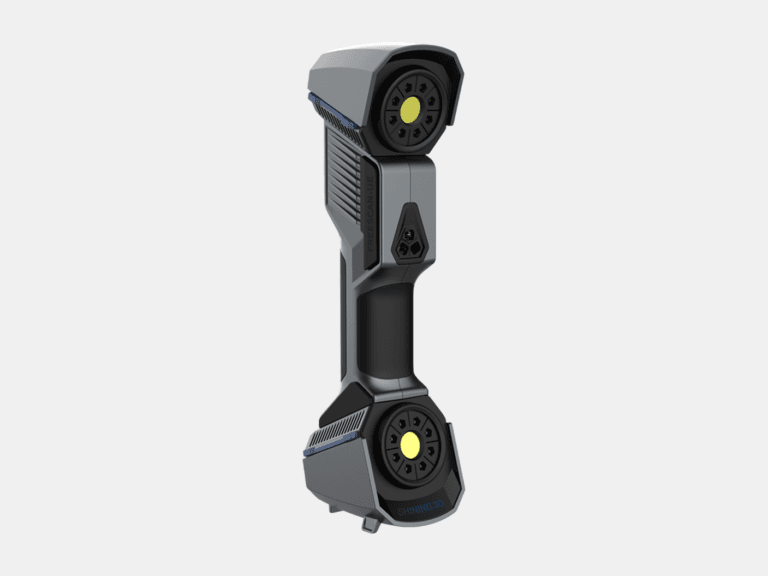
With a 3D accuracy up to 0.02 mm, the FreeScan UE Pro is a metrology-grade handheld 3D laser scanner for high-detail 3D laser scanning of small to medium objects.
MEASURING ARM CMM
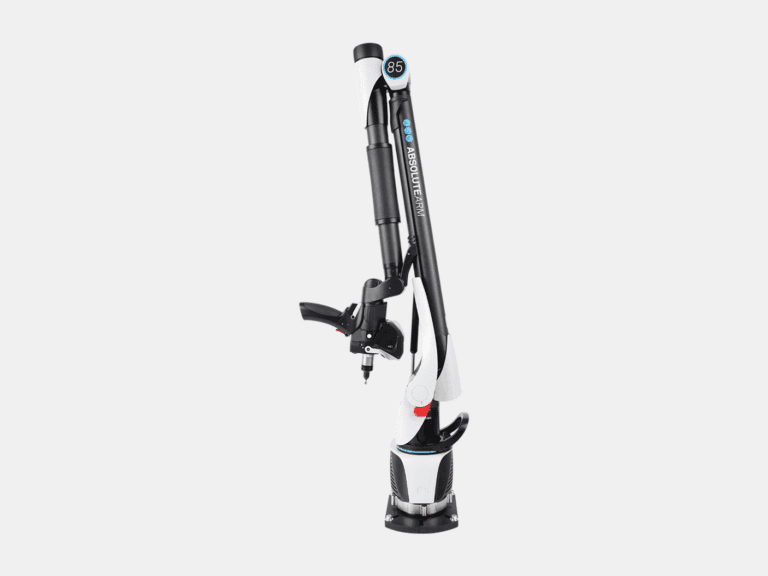
With a 3D accuracy up to 0.013 mm for the AS1 3D laser scanner, the Absolute Arm 7-Axis combines probing and 3D laser scanning for precision measurement of small to medium objects.
LASER TRACKER CMM
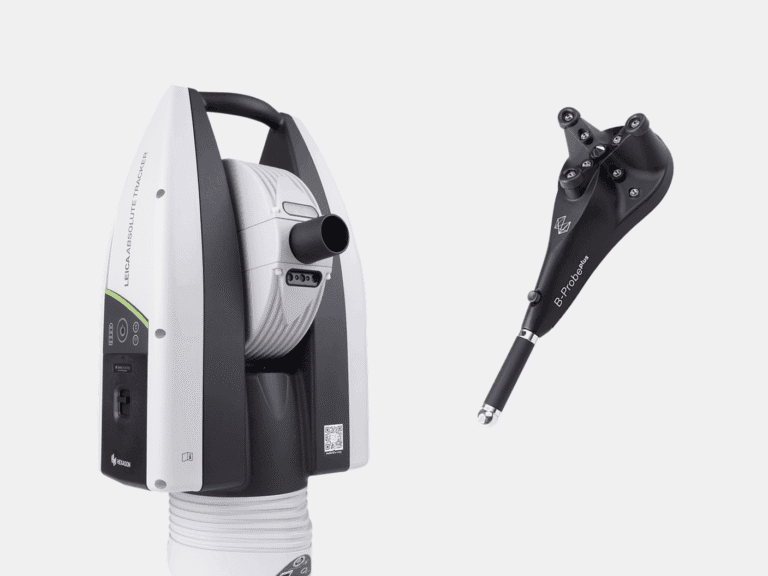
With a range of 0.8-160 m and a probing accuracy up to 0.015 mm, the AT500 is used to probe small to large objects for precision inspection, alignment, and verification.
TOTAL STATION
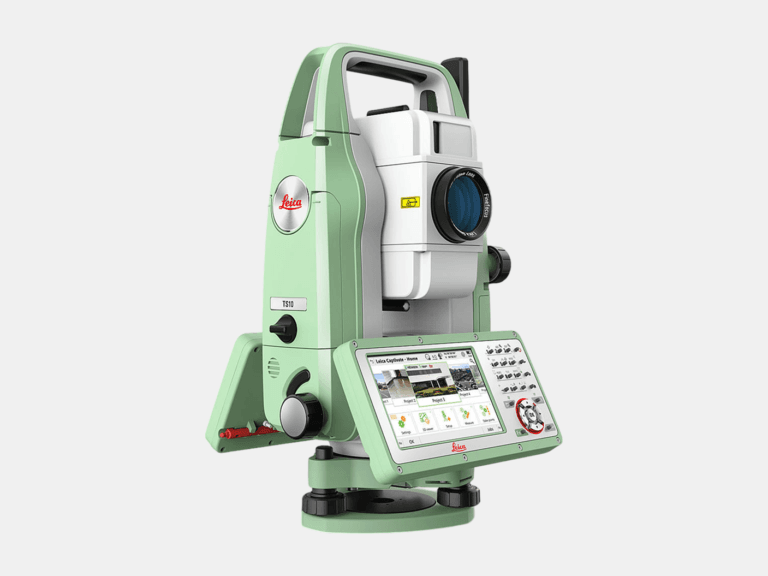
With an angular accuracy of 1″, a distance accuracy up to 1 mm, and a range of 0.9-3,500 m, the TS10 establishes survey control that enables the most accurate terrestrial 3D laser scan registration possible.
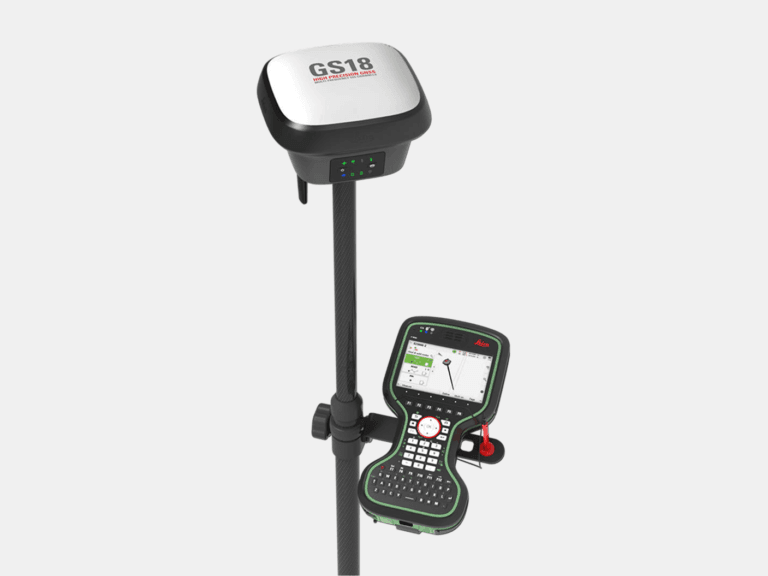
RTK GNSS ROVER
With an accuracy up to 8 mm and tilt compensation, the GS18 T quickly georeferences data into your required coordinate system for consistent field-to-office alignment.
Common Applications
Where Registered Point Clouds Deliver Value
As-Built Deliverables
